
If you’ve noticed a musty smell in your laundry, it’s probably mold. Knowing how to kill mold in washing machines for good can save your clothes, your health, and your appliance. Mold doesn’t just make your washer smell bad; it can also shorten the life of the machine and even transfer spores onto your freshly washed laundry. But do you know that you can tackle this problem with simple, proven methods?
Quick Step-by-Step Fix:
- Run an empty hot water cycle with 2 cups of white vinegar.
- Scrub the rubber gasket with baking soda paste.
- Clean the detergent drawer with vinegar or mild bleach.
- Run another hot cycle with 1 cup of baking soda.
- Leave the door open after each wash to prevent future mold.
That’s the quick version. But if you really want to get rid of mold in your washing machine permanently, and stop it from coming back, keep reading.
Why Mold Grows in Washing Machines
Mold thrives in warm, damp, and dark spaces, exactly what a washing machine provides. The main culprits are:
- Moisture trapped in the rubber gasket (especially in front loaders).
- Detergent residue that feeds mold growth.
- Closed doors that create a humid environment.
- Infrequent cleaning of detergent drawers and drains.
If you’ve ever left a load of wet laundry sitting in the drum overnight, you’ve essentially created the perfect breeding ground for mold. Over time, this leads to black spots, slimy buildup, and that unmistakable musty odor that clings to your clothes even after a wash.
Step-by-Step: How to Kill Mold in Washing Machines for Good
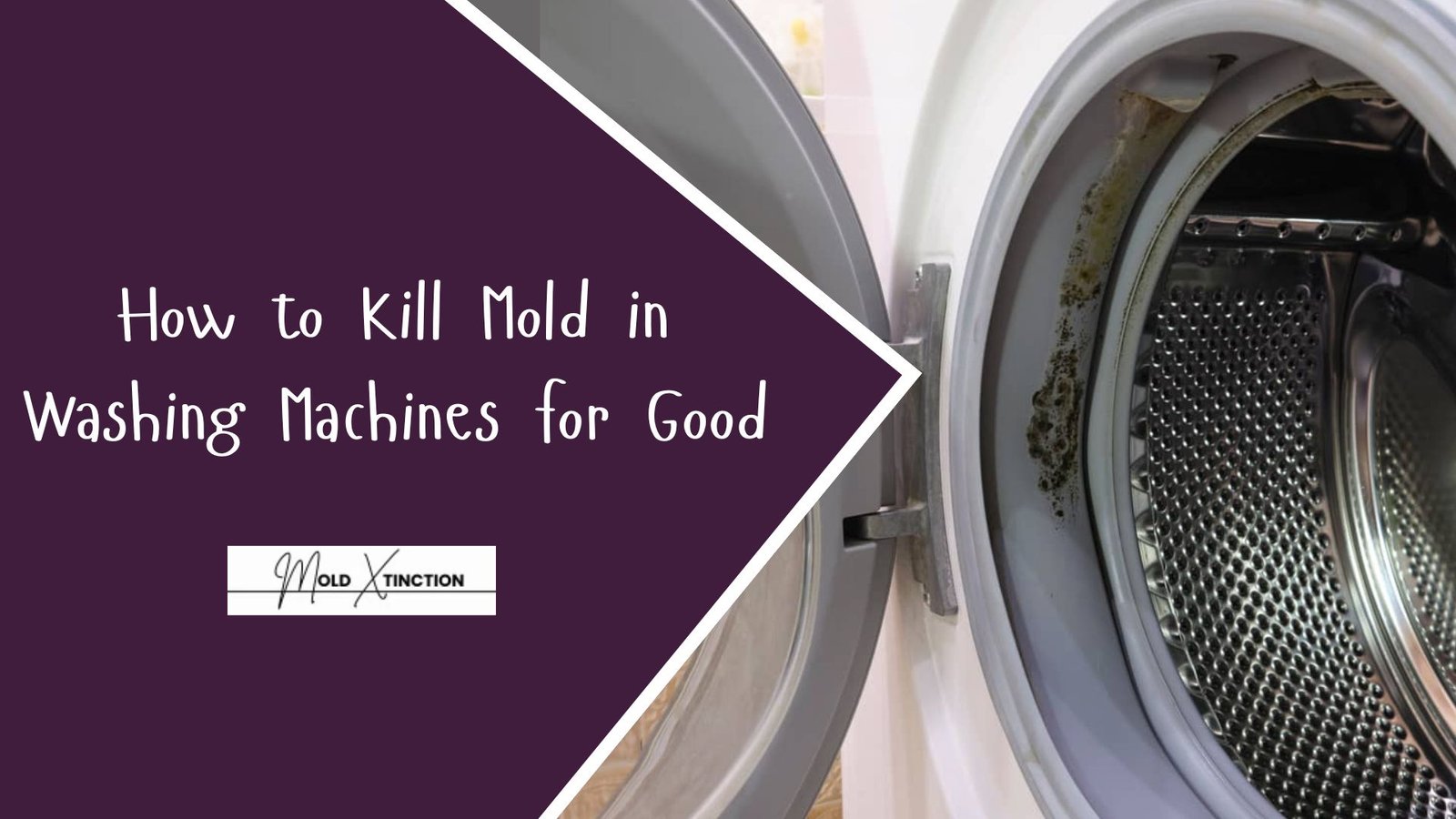
Let’s go deeper into each step so you can restore your washer to a fresh, mold-free state.
1. Run a Vinegar Hot Wash Cycle
- Pour 2 cups of white vinegar directly into the drum.
- Select the hottest and longest wash cycle.
- Let the vinegar break down mold, mildew, and detergent residue.
Why it works: Vinegar is acidic, killing 82% of mold species and neutralizing odors. Unlike bleach, it doesn’t leave behind harsh fumes, making it safe for regular use.
2. Scrub the Rubber Gasket
- Mix baking soda and water into a thick paste.
- Pull back the rubber door gasket and check for black mold spots.
- Scrub with an old toothbrush or cloth until clean.
Pro tip: Wear gloves, the gunk can contain mold spores and bacteria. If the gasket is severely damaged or stained, consider replacing it. A new gasket costs less than replacing the entire washer.
3. Clean the Detergent Drawer
- Remove the drawer completely.
- Soak it in hot water and vinegar (or diluted bleach if heavily stained).
- Use a small brush to clean the cavity where the drawer slides in.
This step is crucial because mold loves leftover detergent and fabric softener. Many people skip cleaning the drawer, but it’s one of the first places mold shows up.
4. Run a Baking Soda Hot Cycle
- Add 1 cup of baking soda directly into the drum.
- Run another hot water cycle.
- This deodorizes the machine and balances out the vinegar treatment.
Baking soda is gentle but effective. It works as a deodorizer, restores freshness, and helps break down soap scum.
5. Wipe Down and Dry Everything
- Use a clean microfiber cloth to wipe the drum, gasket, and glass door.
- Dry all moisture-prone areas.
- Leave the door and detergent drawer open to air dry completely.
This final step ensures you don’t leave behind damp areas that mold can quickly regrow in. Think of it as sealing the deal after all your hard work.
Deep Cleaning Mold in Top Load vs. Front Load Washing Machines
Not all washers are the same. Here’s how to handle each type:
Killing Mold in Front Load Washers
- Focus on the door gasket, since it traps moisture.
- Always wipe it dry after each load.
- Keep the door cracked open when not in use.
- Avoid leaving laundry sitting inside overnight.
Killing Mold in Top Load Washers
- Mold often hides under the rim of the drum.
- Use a vinegar spray and scrub brush to reach underneath.
- Leave the lid open after washes to prevent moisture buildup.
- Don’t overload the drum, air needs to circulate.
Natural Cleaners vs. Chemical Cleaners for Mold
You have two main cleaning options.
Natural Options (Safe & Eco-Friendly)
- White vinegar – breaks down mold and removes odors.
- Baking soda – scrubs away buildup and deodorizes.
- Hydrogen peroxide – kills mold spores effectively.
These are budget-friendly, safe for pets and kids, and won’t damage your washer.
Chemical Options (For Severe Mold)
- Bleach – powerful but harsh; use sparingly.
- Commercial washing machine cleaners – convenient but costlier.
Expert advice: Start natural. Switch to bleach or cleaners only if mold is severe and stubborn. Always run an extra rinse cycle after using strong chemicals.
How to Prevent Mold in Washing Machines Permanently
Killing mold once is not enough; you need to stop it from coming back.
- Leave the door and detergent drawer open after every wash.
- Wipe the gasket dry with a towel after each cycle.
- Use the right detergent amount – too much creates residue.
- Run a monthly hot cycle with vinegar to keep mold away.
- Clean lint traps and drains regularly.
- Avoid liquid fabric softeners – they leave behind residue mold loves.
- Wash smaller loads when possible to prevent excess moisture buildup.
These habits are simple but powerful in keeping your washer mold-free long term.
Signs You Have Mold in Your Washing Machine
Wondering if your washer is already moldy? Look for:
- A musty smell on clothes after washing.
- Black spots on the rubber gasket.
- Slimy buildup in the detergent drawer.
- Visible residue around the drum.
- Clothes that come out smelling worse than they went in.
If you spot any of these, it’s time for a deep clean.
Is Mold in Washing Machines Dangerous?
Yes, mold exposure can trigger:
- Allergies and respiratory irritation.
- Skin rashes from contaminated laundry.
- Asthma flare-ups.
- In rare cases, serious infections for people with weak immune systems.
That’s why removing mold from your washing machine is not just about smell, it’s about your health.
How Often Should You Clean Your Washing Machine?
Experts recommend:
- Light cleaning: once a month (vinegar cycle + wipe down).
- Deep cleaning: every 3–6 months (gasket scrub, drawer cleaning, baking soda cycle).
If you live in a humid climate or do laundry daily, clean more often. Prevention is much easier than dealing with mold after it sets in.
FAQs About How to Kill Mold in Washing Machines
Can vinegar kill mold in washing machines?
Yes. Vinegar is highly effective at killing most mold species and deodorizing your machine. Run a hot cycle with 2 cups of vinegar for best results.
Will bleach kill mold in my washing machine?
Yes, bleach kills mold, but it can be harsh on rubber seals. Use it only for severe mold cases and rinse afterward with a vinegar cycle.
What’s the best cleaner for mold in washing machines?
For natural cleaning, vinegar and baking soda work best. For stubborn mold, use hydrogen peroxide or a commercial washing machine cleaner.
How do I stop mold from coming back?
Keep the door and detergent drawer open after washes, wipe moisture-prone areas, and run monthly maintenance cycles with vinegar or a machine cleaner.
Is mold in washing machines harmful to clothes?
Yes. Mold spores can transfer to your laundry, causing stains and lingering odors. It may also cause skin irritation, especially for people with sensitive skin.
Can I use hydrogen peroxide instead of bleach?
Absolutely. Hydrogen peroxide is less harsh than bleach and works well at killing mold. Use 1 cup in a hot water cycle for effective results.
Why does my washing machine smell even after cleaning?
If odors remain, check hidden areas like the drain pump filter, lint trap, or behind the detergent drawer. Mold often hides in these overlooked spots.
Conclusion
Mold in washing machines is a common but solvable problem, and the key is combining deep cleaning with consistent maintenance. By using simple ingredients like vinegar and baking soda, along with smart habits such as leaving the door open and wiping down moisture-prone areas, you can completely eliminate mold and keep it from coming back. Regular upkeep not only keeps your laundry smelling fresh but also protects your health and extends the life of your machine. With just a little effort each month, you can finally kill mold in washing machines for good and enjoy a cleaner, healthier home.
Disclaimer: This article is for informational purposes only and is not a substitute for professional advice, diagnosis, or treatment. Always consult a qualified mold remediation specialist or healthcare provider for concerns about mold exposure or removal.