Safe Mold Removal Tips for Homes with Children: Mold is more than just an ugly spot on your wall it can be a serious health risk, especially for children.
Kids breathe faster than adults and have developing immune systems, which means mold exposure can affect them more quickly. It can trigger allergies, coughing, asthma, and even skin rashes.
Many parents think a little mold in the bathroom or kitchen isn’t a big deal. But mold spreads fast and hides in walls, carpets, and air vents where you can’t see it. Before you know it, that small patch can turn into a major health hazard.
Safe Mold Removal Tips for Homes with Children
You can get rid of mold safely without putting your children at risk. In this guide, we’ll share safe mold removal tips for homes with children, including how to clean effectively, what products to use, and how to prevent it from coming back. Let’s make your home a cleaner, safer place for your whole family.
1. Identify the Type and Source of Mold
Before you start cleaning, it’s important to know what kind of mold you’re dealing with and where it’s coming from. Not all molds are the same; some are harmless, while others, like black mold (Stachybotrys chartarum), can be dangerous.
Common places mold hides:
- Bathroom tiles and grout
- Kitchen sinks or under cabinets
- Behind wallpaper or paint
- Air conditioners and vents
- Window sills and damp basements
Tip: If the mold covers more than 10 square feet, or if your child already has breathing problems, call a professional mold remediation service. Large infestations should never be handled on your own.
2. Protect Your Family During Mold Cleaning
Children should never be in the same room where mold removal is happening. When cleaning mold, spores become airborne and can spread through the air.
Here’s how to protect your kids:
- Move them to another room or floor during cleaning.
- Seal off the affected area using plastic sheeting and painter’s tape.
- Keep doors and windows open for ventilation.
- Turn off air conditioners and fans to avoid spreading spores.
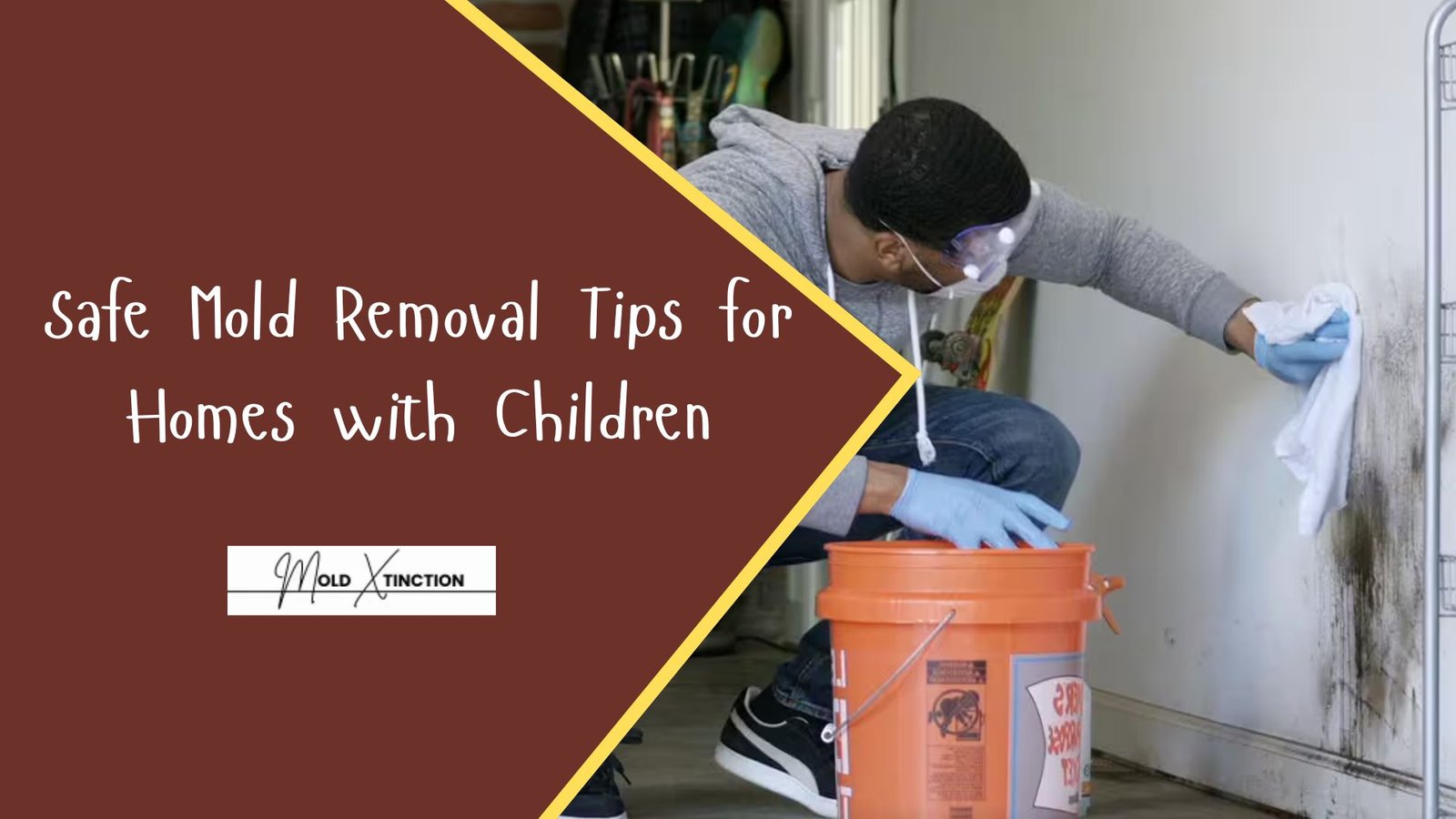
If you’re the one cleaning, wear gloves, goggles, and an N95 mask for safety. Once you finish, change your clothes and wash your hands thoroughly.
3. Use Child-Safe Cleaning Products
Many mold removers on the market contain harsh chemicals that can irritate your child’s lungs or skin. Instead of using strong bleach or ammonia, try natural, kid-safe alternatives that still work well.
Safe options include:
- White vinegar: Kills about 80% of mold species. Spray directly and leave for 1 hour before wiping.
- Baking soda: Mix with water to form a paste for scrubbing moldy tiles.
- Hydrogen peroxide (3%): Use as a spray for porous surfaces like walls and wood.
- Tea tree oil: A natural antifungal that works great on bathroom surfaces.
These solutions are gentle, non-toxic, and safe to use around kids but still powerful enough to kill mold and bacteria.
4. Avoid Using Bleach Around Children
Bleach might seem like the fastest solution for killing mold, but it’s not safe for homes with kids. The fumes can cause headaches, coughing, and irritation, and it only removes mold from the surface not deep inside walls or materials.
If you must use bleach, never mix it with ammonia or other cleaners, as that can release toxic gases. Always ventilate the room and keep children and pets out for several hours afterward.
For long-term safety, vinegar and hydrogen peroxide are better and safer choices.
5. Clean Small Mold Patches Yourself (Safely)
If the mold is less than 10 square feet, you can usually handle it yourself without hiring professionals. Here’s a safe method:
Step-by-step cleaning guide:
- Wear gloves, mask, and safety goggles.
- Mix vinegar or hydrogen peroxide in a spray bottle.
- Spray directly on the moldy area and wait 30–60 minutes.
- Wipe with a clean cloth or sponge.
- Rinse with warm water and dry the area completely.
Always throw away cleaning materials after use don’t reuse the same rag for other areas.
6. Fix Leaks and Moisture Problems Quickly
Mold only grows when there’s moisture. Even the best cleaning won’t help if you don’t fix what’s causing the dampness.
Common causes of mold in homes:
- Leaky pipes or faucets
- Roof leaks
- Condensation on windows
- Flood damage or poor drainage
Action steps:
- Repair leaks immediately.
- Use exhaust fans in bathrooms and kitchens.
- Keep indoor humidity below 50% (you can use a dehumidifier).
- Open windows often to improve airflow.
By controlling moisture, you stop mold before it starts.
7. Replace Mold-Infested Materials
Sometimes cleaning isn’t enough. If mold has gotten deep into carpets, drywall, or furniture, it’s safer to replace them completely.
Mold can hide under surfaces where even strong cleaners can’t reach. Throwing away contaminated materials ensures your children won’t be exposed again later.
Tip: When removing moldy materials, seal them in plastic bags before disposal to prevent spreading spores around your home.
8. Keep Indoor Air Fresh and Dry
Poor ventilation can trap moisture and help mold grow. To maintain clean air quality in a home with kids, make ventilation part of your daily routine.
Easy ways to improve air circulation:
- Use HEPA air purifiers in rooms where mold has appeared before.
- Open windows for at least 15 minutes daily.
- Keep furniture a few inches away from walls to allow air movement.
- Change HVAC filters every 2–3 months.
This keeps the air clean and helps your children breathe easier.
9. Teach Kids Healthy Habits
Even children can help prevent mold if you teach them the right habits early. Simple things like hanging wet towels properly or not leaving food out can make a big difference.
Teach your kids to:
- Always close bathroom doors after a shower to keep humidity contained.
- Wipe spills immediately.
- Keep windows slightly open when weather allows.
- Tell you if they see black or green spots anywhere.
When the whole family works together, mold prevention becomes easier and more effective.
10. Prevent Mold from Coming Back
After cleaning, the most important step is stopping mold from returning. Prevention is much easier than repeated cleaning.
Here’s how:
- Keep humidity low (use a hygrometer to check).
- Clean surfaces weekly with vinegar spray.
- Use mold-resistant paint in bathrooms and basements.
- Run a dehumidifier in damp areas.
- Inspect your home every month for leaks or discoloration.
A few minutes of maintenance can save you weeks of trouble later.
11. Know When to Call a Professional
Some mold problems are too risky to handle on your own, especially when children are in the house.
Call a mold removal expert if:
- The mold covers more than 10 square feet.
- You smell mold but can’t find where it’s coming from.
- Your child develops unexplained allergies or coughing.
- There was recent water damage or flooding.
Professionals have protective gear and HEPA equipment that safely remove mold without spreading spores into the air your kids breathe.
12. After Mold Removal: Clean and Disinfect the Whole Area
Once you’ve removed the mold, the job isn’t done yet. Spores can still linger on nearby surfaces.
Final steps:
- Wipe walls, doors, and baseboards with vinegar solution.
- Wash curtains, bedding, or rugs near the moldy area.
- Vacuum with a HEPA-filter vacuum cleaner.
- Wash your child’s toys if they were nearby.
This ensures your home is completely clean and mold-free again.
FAQs
- Is it safe to clean mold if I have children at home?
Yes, but make sure your kids stay out of the area while you clean. Use natural cleaners like vinegar or baking soda instead of harsh chemicals. - Can black mold make my child sick?
Yes. Black mold can cause coughing, sore throat, headaches, and breathing problems, especially in children with allergies or asthma. - What should I do if mold keeps coming back?
You likely have a moisture problem. Fix leaks, improve ventilation, and use a dehumidifier to control humidity. - Can vinegar really kill mold?
Yes. Vinegar kills most types of household mold and is a safe, non-toxic option for homes with kids and pets. - When should I call professionals?
If the mold covers a large area, keeps returning, or is inside walls or HVAC systems, it’s safest to call a certified mold remediation expert.
Helpful Guides:
Conclusion
Mold can be sneaky, but you can beat it with the right knowledge and habits. Keeping your home dry, clean, and well-ventilated is the best way to protect your children from the hidden dangers of mold.
Always choose safe, natural cleaning products, and make sure kids aren’t in the room during mold removal. Fix leaks fast, dry wet spots immediately, and inspect often.
With these safe mold removal tips for homes with children, you can create a healthy environment where your family can breathe freely and grow safely without worrying about what’s hiding behind the walls.